- Airline operators, unions clash over multi-billion Naira ticket charge controversy
- Ground handlers to suspend services to two major domestic airlines over mounting debt
- Dual Honours for Olateru: Inducted into Aviation Hall of Fame, ITPN Cement Legacy of Excellence
- Sanctuary of Memory: How NAHOF inspires the Next Generation of aviators
- Beyond the App: True story behind Uber’s Nigerian exit amid security concerns



Airline operators, unions clash over multi-billion Naira ticket charge controversy
- Okonkwo cites N3,300 fuel price spike, reveals 30% presidential waiver
- ATSSSAN slams operators’ “mischief,” vows to defend statutory safety levies
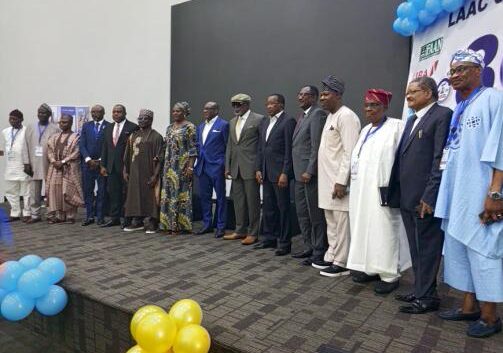
What was intended as an intellectual exchange on industry sustainability quickly descended into a fiery verbal battleground at the League of Aviation and Airport Correspondents (LAAC) annual seminar in Lagos, as the Airline Operators of Nigeria (AON) and joint aviation sector unions clashed openly over the volatile 5% Ticket Sales Charge (TSC) controversy.
The seminar hall, packed with aviation regulators, airline executives, and trade union leaders, turned tense when representatives of domestic carriers took the podium to address operational bottlenecks in Nigeria’s aviation sector.

The conversation derailed as operators challenged the legal standing and moral authority of labour unions, specifically the Air Transport Services Senior Staff Association of Nigeria (ATSSSAN) and the National Union of Air Transport Employees (NUATE), to enforce the collection of statutory levies on behalf of regulatory bodies.
The heated exchange at the LAAC seminar underscores the deepening rift in Nigeria’s aviation landscape.
With billions of Naira in statutory remittances hanging in the balance, industry stakeholders leave the venue clear on one point: unless regulatory authorities step in decisively to resolve the dispute, the friction between domestic carriers and organised labour threatens to derail sector stability.
Speaking on behalf of Airline Operators of Nigeria (AON), Executive Chairman of United Nigeria Airlines, Prof. Obiora Okonkwo, argued that the recovery of unremitted 5% TSC/CSC funds is exclusively a statutory arrangement between individual airlines and the Nigerian Civil Aviation Authority (NCAA).
Speaking at the 30th annual conference of the League of Airport and Aviation Correspondents (LAAC) in Lagos, with the theme: “Towards a Sustainable Aviation Industry: Balancing government revenue demands with sector growth “, Okonkwo said that prior to February this year, all airlines were meeting their financial obligations to the government without issue.
According to Okonkwo, payment difficulties emerged only when airlines began to face higher aviation fuel costs, which rose to N3,300 as a result of the US-Iran crisis.
He said the Airline Operators of Nigeria (AON) was the first to raise concerns about the financial burden of regulatory charges during the downturn.
“Before February this year, there were no payment problems. All airlines were paying. The AON issue only became a problem because of the Gulf crisis. AON was the first to cry out. We wrote to the President, explaining that we could no longer pay these charges. We requested either a complete suspension of charges or temporary relief during the aviation crisis, and the request was granted. The President agreed and waived 30%, Okonkwo disclosed.
Following the presidential waiver, Okonkwo said airlines met with the NCAA and the Ministry of Aviation to establish a structured repayment framework. “We met with the NCAA and the Minister. We held several meetings. In one decisive meeting, the NCAA requested that airline operators pay 10% of the legacy debts within a specified period, then pay the rest in instalments over time, and that each airline meet with the NCAA’s director of finance.
Union executives pushed back swiftly and uncompromisingly. Labour leaders fired back, asserting that the non-remittance of the 5% TSC-a fee paid upfront by passengers at the point of ticket purchase—directly jeopardises air safety oversight and worker welfare.
Secretary-General of Air Transport Services Senior Staff Association of Nigeria (ATSSSSAN), Francis Akinjole, said, “We heard them very well. They are saying the five per cent TSC is not justifiable, but it is not the making of the DG NCAA or the Minister. That payment was established by an Act; so they know where to go. They are just trying to find what does not exist to stop what already exists. They are being very, very mischievous.”
“This is an Act; it is the law. You cannot say that because things are hard for you, you will then choose which law to obey. When this Act was enacted, there was a public hearing, and if it is to be stopped, there will have to be a public hearing as well.”
The union leader emphasised that the statutory 5% levy serves as the primary operational lifeline for key aviation safety agencies.
By withholding billions of Naira in passenger-funded levies, defaulting airlines starve safety regulators of funds, directly crippling the implementation of negotiated Conditions of Service (CoS) for aviation agency employees.
“Airlines act merely as collection agents for the 5% TSC; that money belongs to the state and its aviation safety architecture, not corporate balance sheets,” a union leader countered.
Labour officials warned they will not stand idly by while safety standards degrade and staff welfare suffers because of corporate non-compliance.
Google+
My experience with flight delays shows that fixed charges do not always reflect the real cost of travel. A condition under which the system fails is when operational expenses significantly exceed the mandated fees.